Tall folding seating requires precise pivot geometry and stable deployed restraint.
Project library / Seating
Seating / Design study
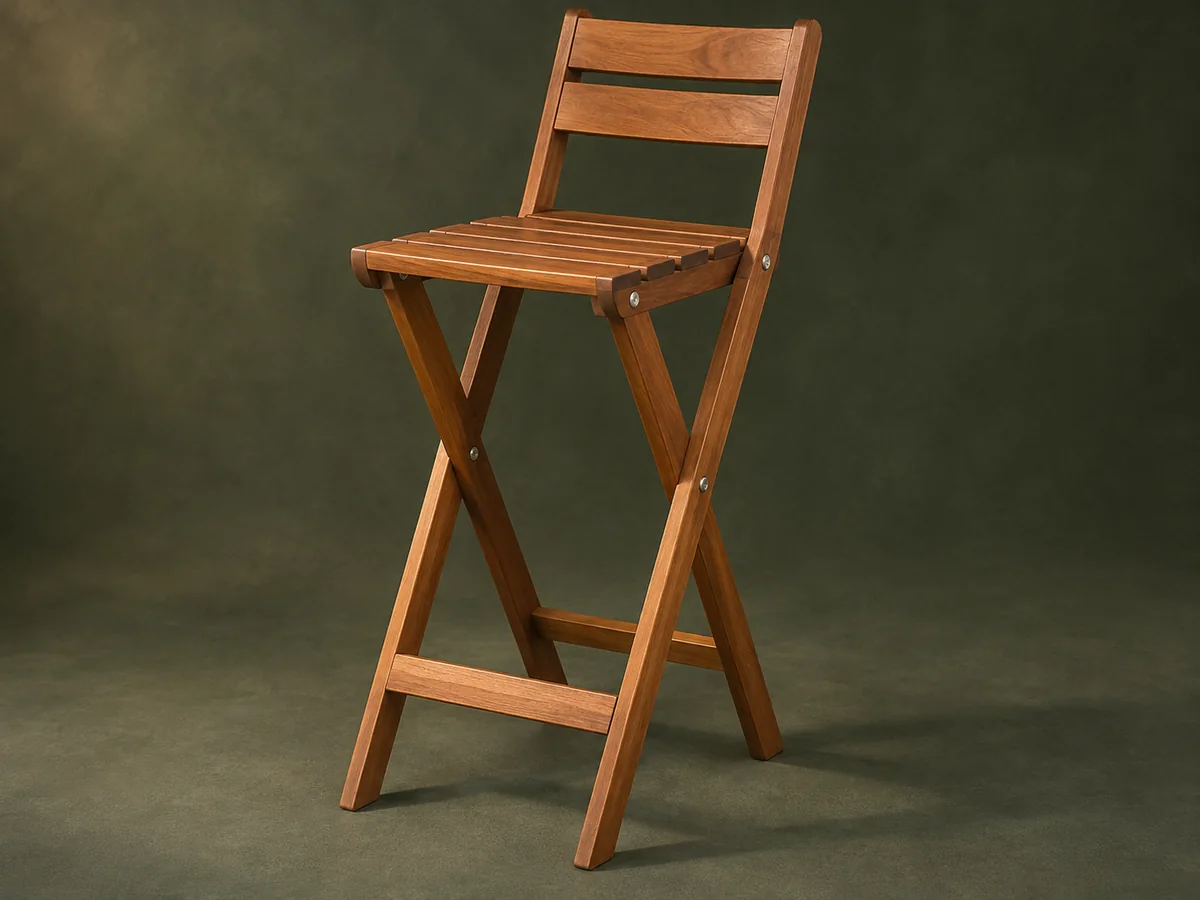
Folding Bar Chair
A tall folding hardwood stool with a slatted seat, low backrest and front footrail.
Advanced5 stages5-page source
Design review required. Resolve diagram/text leg naming, folding restraint and seating load performance before construction/use. This guide has not been shop-tested.
Understand the project
What makes this build.
Tall folding seating requires precise pivot geometry and stable deployed restraint.
The seat uses five slats and the back two.
Points to resolve before building
- The source’s inconsistent leg naming and lack of a verified load/locking specification must be resolved before use.
Prepare the workbench
Materials & tools.
Check what you have, then confirm stock sizes and hardware against your chosen dimensions.
Materials checklist
Tools & operations
- Saw
- Drill
- Sliding bevel
- Square
Tool choices may include practical editorial suggestions. Use workholding and guarding appropriate to the actual machine and operation.
Choose dry, sound stock and test unfamiliar joints in scrap. Keep guards, push aids, eye protection, and dust control appropriate to the work.
Keep the numbers close
Measurements to know.
Selected dimensions verified from the source. This is not an automatically scaled cutting list.
| Seat rear height shown | 680 mm | Source p. 2 |
|---|---|---|
| Seat slat length | 420 mm | Source p. 1 |
Printed diagrams and concept images are not scale references. Verify measurements, material thickness, hardware fit, and allowances before cutting.
Inches to millimeters
Convert a measurement without changing the design. Enter a decimal or a fraction, such as 1 3/8.
Nominal lumber names and actual finished sizes are different. Converting units does not choose a substitute stock size.
Read, assess & plan
Explore the construction.
Review stages explain the historical design and unresolved decisions; they are not approval to build or use it.
Resolve leg identities
- Compare the diagrams with the text, which reverses front/rear leg names in places. Mark a full-size side view and all pivot centers before cutting.
Before moving onThe folding geometry is unambiguous.
Prepare the angled parts
- Cut the paired legs and side rails with their specified end angles. Retain the triangular upper offcuts for the backrest wedges.
Before moving onMirrored pairs match.
Build the slatted seat
- Fix five equal slats between the rails and add the internal support blocks at the drawing’s offset.
Before moving onSeat is square and slats evenly spaced.
Mock up the pivots
- Dry-assemble both leg pairs and seat with washers and locking nuts. Verify open stance, closing sweep and a positive method of preventing collapse.
Before moving onNo binding or accidental folding path remains.
Fit back and footrails
- Attach the wedges and two back slats, then the front footrest and rear crosspiece. Finish and perform a competent stability/load review before sitting.
Before moving onJoints, pivots and stance are checked.
1 / 5
Progress and notes stay in this browser. Nothing is uploaded.
Source notes.
- Original PDF
- Folding Bar Stool.pdf
- Source length
- 5 pages
- Attribution
- Collection copyright 2004 Martian Auctions; original authorship unverified
- This edition
- 116 Studio · Original written companion and AI concept image · November 2026
Page references count from the first page of this PDF. The original is retained in the owner’s private woodworking collection; it is not distributed by this website. Consult it for full drawings, templates, and details beyond this companion.
Historical plans can omit essential context. Source references identify where a detail came from; they do not certify the design or replace current manufacturer instructions or applicable professional review.
More from this corner of the shop.
Seating
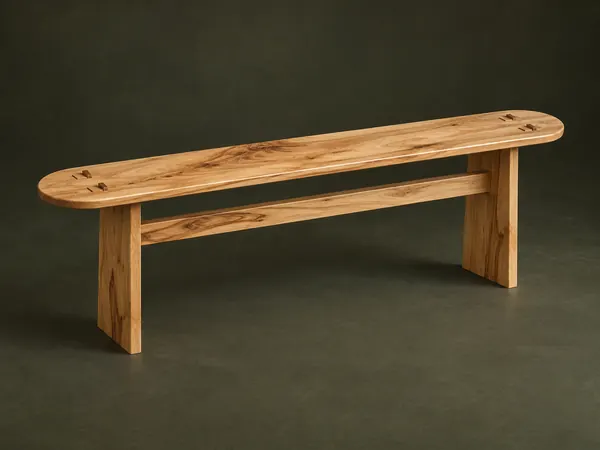
Four-Board Bench
A slender hickory bench joins a rounded seat, two cutout leg panels, and a long stretcher with exposed wedged tenons.
Intermediate5 stages
Seating
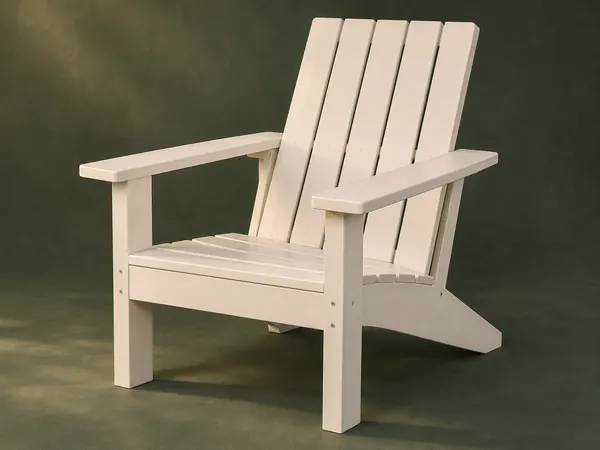
Straight-Back Adirondack Chair
A painted outdoor chair uses broad arms, a slatted seat, and a straight-topped reclined back supported by long stringers.
Intermediate5 stages
Seating
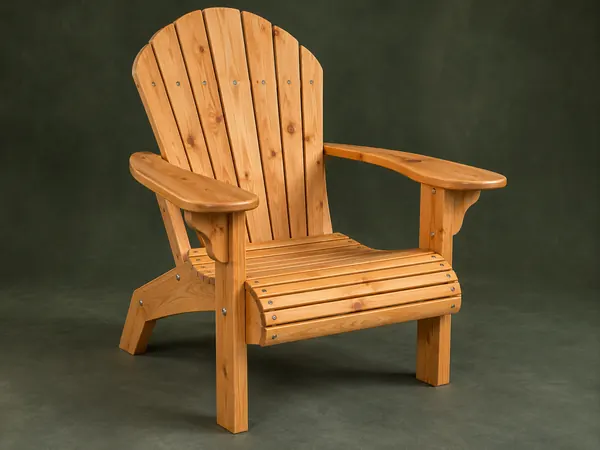
Fan-Back Adirondack Chair
A rustic pine Adirondack chair pairs a rounded seven-slat fan back with a curved eleven-slat seat and broad shaped arms.
Advanced6 stages