Mirrored curved parts and several coordinated pivots require advanced accuracy.
Project library / Seating
Seating / Build companion
Oak Folding Garden Chair
A shaped white-oak folding chair with a slatted back and seat, dowelled stretchers and brass pivots.
Advanced5 stages16-page source
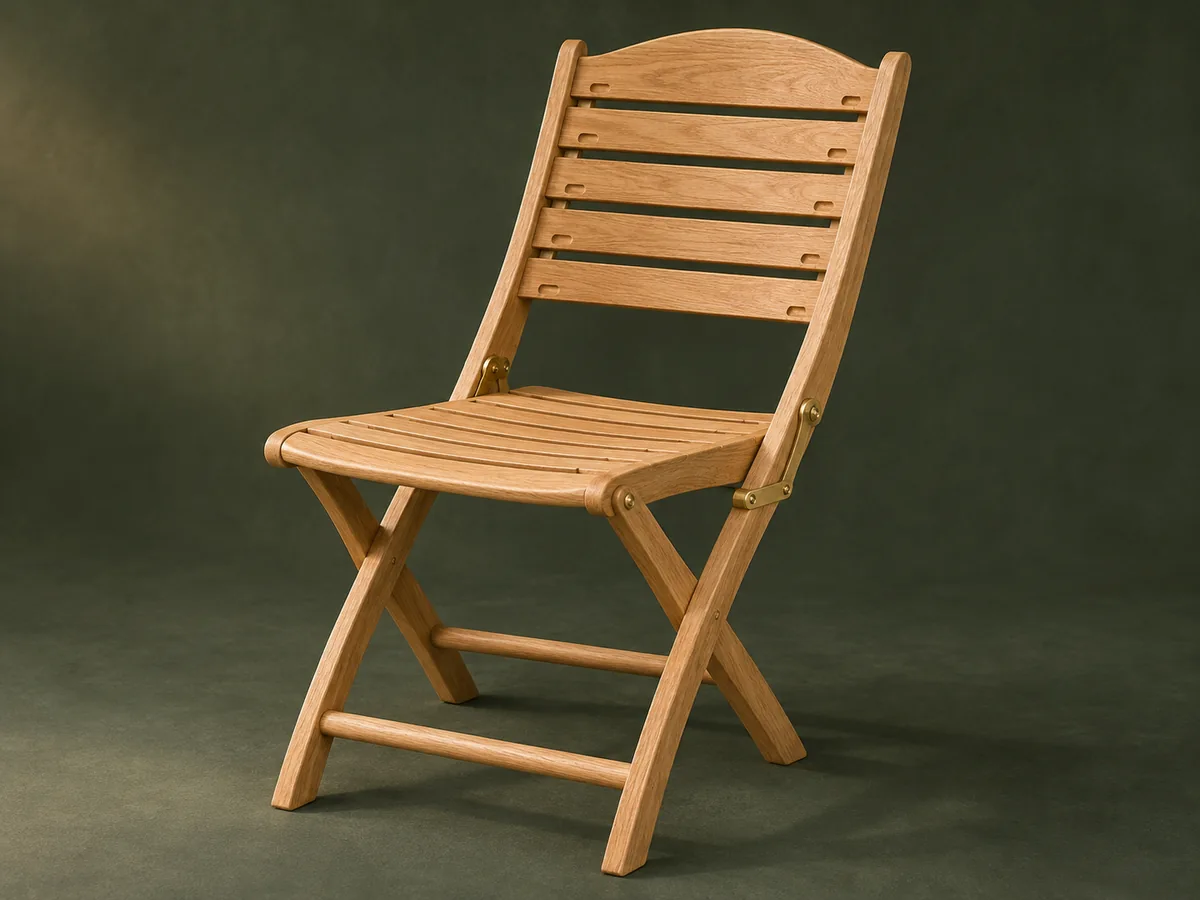
A companion to the original plan. Original guide to an archival plan; not shop-tested. Check the source drawings and actual material sizes before cutting.
Understand the project
What makes this build.
Mirrored curved parts and several coordinated pivots require advanced accuracy.
Brass straps control the folding geometry.
Points to resolve before building
- Review pinch points and stability before use; no load rating is established here. Use the original licensed patterns privately.
Prepare the workbench
Materials & tools.
Check what you have, then confirm stock sizes and hardware against your chosen dimensions.
Materials checklist
Tools & operations
- Bandsaw
- Drill press
- Router
- Hand tools
- Clamps
Tool choices may include practical editorial suggestions. Use workholding and guarding appropriate to the actual machine and operation.
Choose dry, sound stock and test unfamiliar joints in scrap. Keep guards, push aids, eye protection, and dust control appropriate to the work.
Keep the numbers close
Measurements to know.
Selected dimensions verified from the source. This is not an automatically scaled cutting list.
| Slat spacing | ¼ in | Source pp. 6, 8 |
|---|---|---|
| Frame stock | ¾ in | Source pp. 11, 12, 13 |
Printed diagrams and concept images are not scale references. Verify measurements, material thickness, hardware fit, and allowances before cutting.
Inches to millimeters
Convert a measurement without changing the design. Enter a decimal or a fraction, such as 1 3/8.
Nominal lumber names and actual finished sizes are different. Converting units does not choose a substitute stock size.
From stock to finished project
Let’s make it.
Read the complete sequence before cutting. Mark a stage complete after its fit checks and any required glue cure.
Verify the patterns
- Use the privately held source patterns at checked scale. Mark left/right inside faces and transfer pivot locations as mirrored pairs. Check the scale against a labeled dimension, since an automatically resized printout would change the folding geometry and hardware positions.
Before moving onPairs are mirrored, not accidentally identical.
Shape the frame
- Cut and refine the curved legs and seat supports from straight-grained stock. Drill the specified holes and fit threaded inserts with a controlled manual method. Keep the paired pivot bores aligned and square to their reference faces so the assembled hardware does not pull the legs sideways.
Before moving onPivots align in both sides.
Join the stretchers
- Fit the round stretchers and wedged tenons using an appropriate guarded or hand-tool method. Glue the leg assemblies flat and square. Orient and fit the wedges from the private details, keeping the frame supported so driving them does not rack the joints.
Before moving onNested frame widths have the required clearance.
Make the slatted assemblies
- Shape and rabbet the seat and back slats, including their curved outer members and decorative notches. Fit them at equal spacing without twisting the frames. Lay out the slat spacing before fastening the first piece, checking the curved edge members remain paired in the proper orientation.
Before moving onSeat and back remain square.
Fit pivots and finish
- Dry-assemble with bushings, washers and retaining straps; verify the full folding motion and stable open position. Finish separately and reassemble with appropriate thread retention. Keep fingers clear of the pivots during testing and correct any binding or unstable open position before allowing anyone to sit.
Before moving onHardware remains secure through repeated folding.
1 / 5
Progress and notes stay in this browser. Nothing is uploaded.
Source notes.
- Original PDF
- Folding Garden Chair.pdf
- Source length
- 16 pages
- Attribution
- James R. Downing design, WOOD magazine, copyright 1997 Meredith Corporation.
- This edition
- 116 Studio · Original written companion and AI concept image · November 2026
Page references count from the first page of this PDF. The original is retained in the owner’s private woodworking collection; it is not distributed by this website. Consult it for full drawings, templates, and details beyond this companion.
Historical plans can omit essential context. Source references identify where a detail came from; they do not certify the design or replace current manufacturer instructions or applicable professional review.
More from this corner of the shop.
Seating
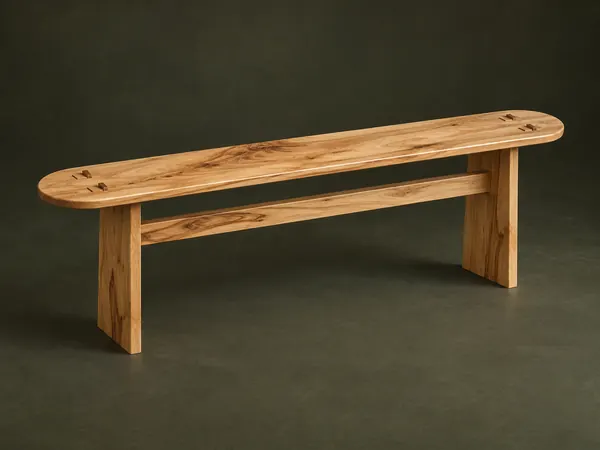
Four-Board Bench
A slender hickory bench joins a rounded seat, two cutout leg panels, and a long stretcher with exposed wedged tenons.
Intermediate5 stages
Seating
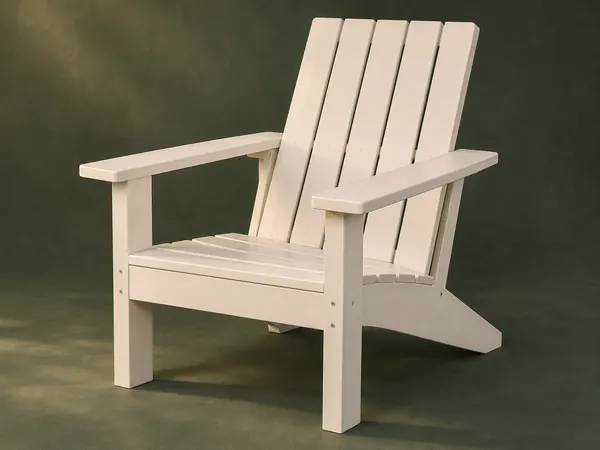
Straight-Back Adirondack Chair
A painted outdoor chair uses broad arms, a slatted seat, and a straight-topped reclined back supported by long stringers.
Intermediate5 stages
Seating
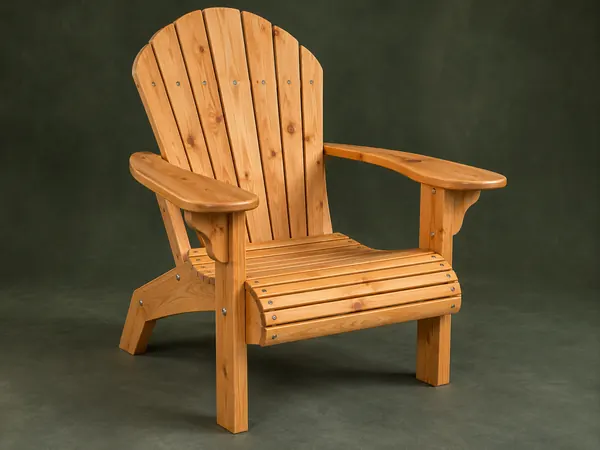
Fan-Back Adirondack Chair
A rustic pine Adirondack chair pairs a rounded seven-slat fan back with a curved eleven-slat seat and broad shaped arms.
Advanced6 stages