Child seating requires safety validation beyond ordinary furniture joinery.
Project library / Beds & nursery
Beds & nursery / Design study
Vintage High-Chair Study
A historical plywood high-chair design presented for design study and modern safety review.
Advanced5 stages4-page source
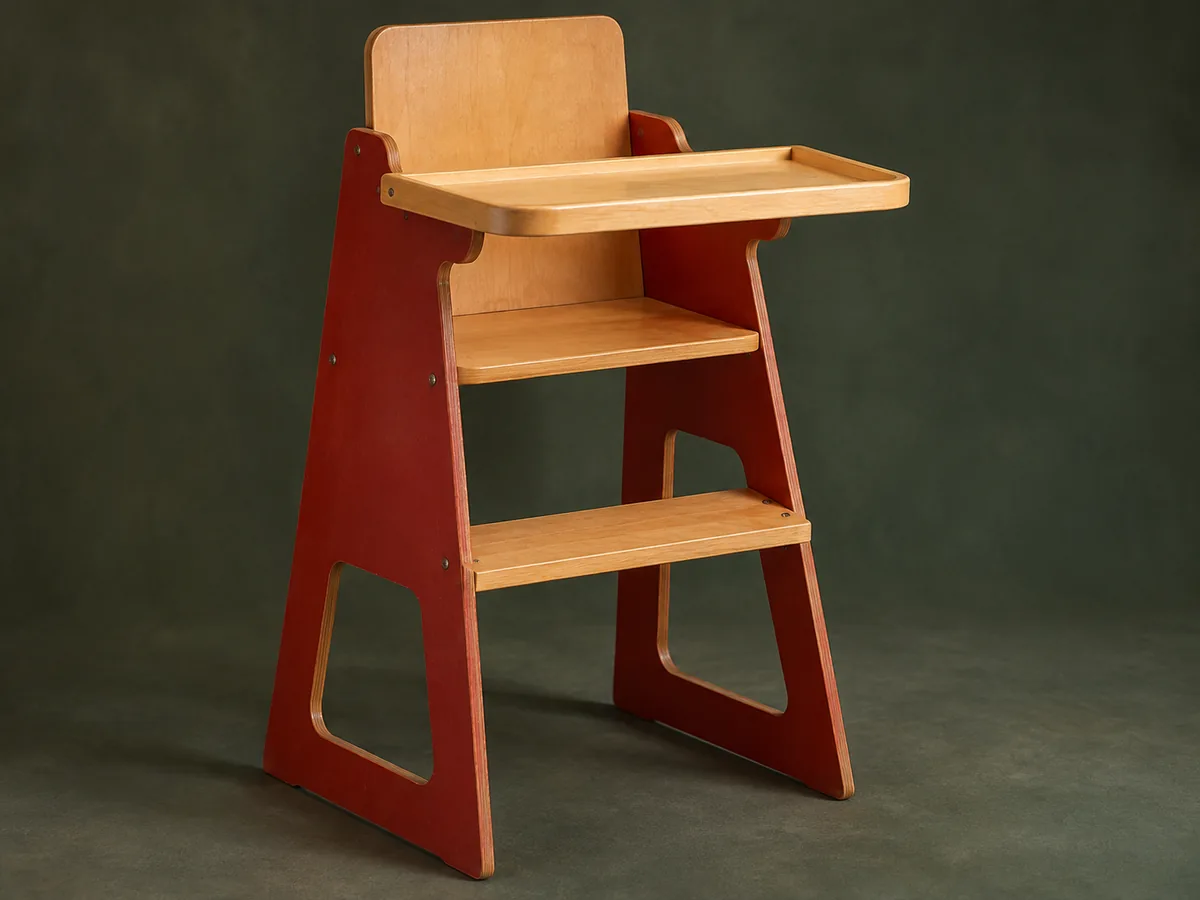
Design review required. Historical study only. Current child-product requirements, validated restraint/entrapment design and testing are unresolved; do not use for a child. This guide has not been shop-tested.
Understand the project
What makes this build.
Child seating requires safety validation beyond ordinary furniture joinery.
The design dates to 1984 and uses shaped sheet-plywood sides.
Points to resolve before building
- Planning/design study only: not a child-use build guide, certification or safety endorsement.
Prepare the workbench
Materials & tools.
Check what you have, then confirm stock sizes and hardware against your chosen dimensions.
Materials checklist
Tools & operations
- Drawing tools
- Measuring tools
Tool choices may include practical editorial suggestions. Use workholding and guarding appropriate to the actual machine and operation.
Choose dry, sound stock and test unfamiliar joints in scrap. Keep guards, push aids, eye protection, and dust control appropriate to the work.
Keep the numbers close
Measurements to know.
Selected dimensions verified from the source. This is not an automatically scaled cutting list.
| Historical side blanks | ¾ × 20 × 37¼ in | Source p. 1 |
|---|---|---|
| Historical tray | ¾ × 11⅝ × 20⅛ in | Source p. 1 |
Printed diagrams and concept images are not scale references. Verify measurements, material thickness, hardware fit, and allowances before cutting.
Inches to millimeters
Convert a measurement without changing the design. Enter a decimal or a fraction, such as 1 3/8.
Nominal lumber names and actual finished sizes are different. Converting units does not choose a substitute stock size.
Read, assess & plan
Explore the construction.
Review stages explain the historical design and unresolved decisions; they are not approval to build or use it.
Document the historical form
- Study the shaped plywood sides, footrest and removable edged tray. Treat the measurements as archival design evidence.
Before moving onThe original form is understood.
Review current requirements
- Obtain current applicable high-chair safety requirements and competent testing advice before considering a functional reproduction.
Before moving onRequired tests and criteria are identified.
Resolve restraint and entrapment
- Replace the assumption that simple homemade straps establish safety with a verified restraint, opening and tray-lock system.
Before moving onRestraint and entrapment risks are assessed.
Assess structure and materials
- Review stability, dynamic loads, fastener retention, coatings and cleanability. Do not carry forward the automotive-putty finishing advice.
Before moving onMaterials and structure have been evaluated.
Choose an appropriate outcome
- Keep an untested reproduction decorative or make a nonfunctional scale study. Functional child use requires validated design and testing beyond this archive.
Before moving onNo child uses an unverified chair.
1 / 5
Progress and notes stay in this browser. Nothing is uploaded.
Source notes.
- Original PDF
- High Chair.pdf
- Source length
- 4 pages
- Attribution
- Woodworker’s Journal, Vol. 8 Issue 2, March–April 1984, project 12075EZ.
- This edition
- 116 Studio · Original written companion and AI concept image · November 2026
Page references count from the first page of this PDF. The original is retained in the owner’s private woodworking collection; it is not distributed by this website. Consult it for full drawings, templates, and details beyond this companion.
Current reference for design review: CPSC guidance for high chairs.
Historical plans can omit essential context. Source references identify where a detail came from; they do not certify the design or replace current manufacturer instructions or applicable professional review.
More from this corner of the shop.
 Design study
Beds & nursery
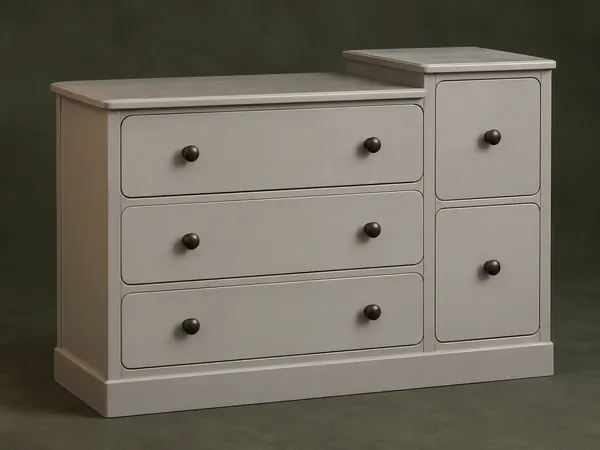
Stepped Nursery Dresser
A pine dresser combines three broad drawers and two narrow drawers beneath two different-height tops.
Advanced6 stages
 Design study
Beds & nursery
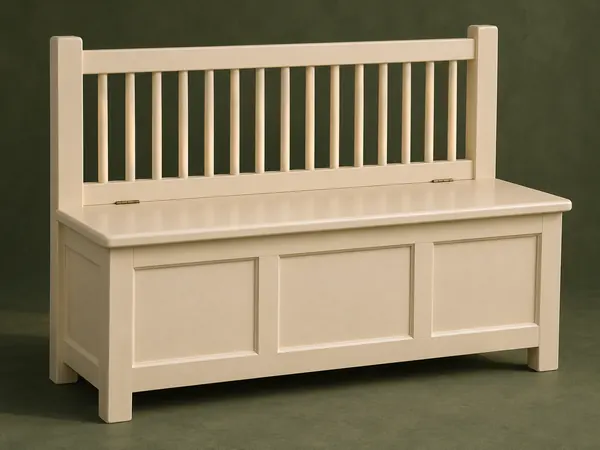
Spindle-Back Toy Chest
A storage chest takes the form of a small bench with a dowel-spindle back and a hinged seat lid.
Advanced5 stages
 Design study
Beds & nursery
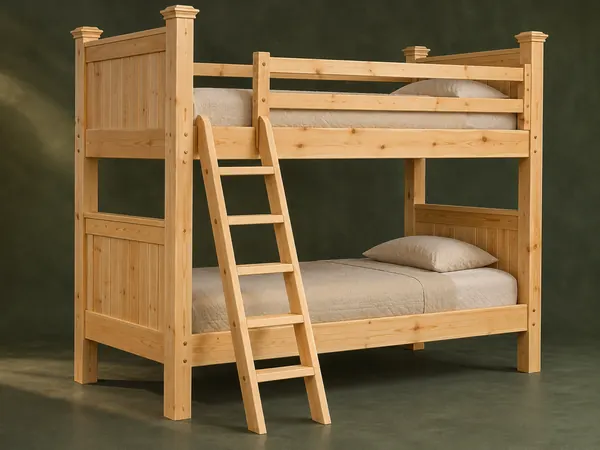
Paneled Timber Bunk Beds
A substantial twin-bunk concept uses paneled ends, laminated posts, wooden mattress slats and a separate ladder.
Advanced5 stages