Turned legs, a rule joint and a fitted drawer require advanced joinery.
Project library / Tables & desks
Tables & desks / Design study
Single Leaf Shaker Table
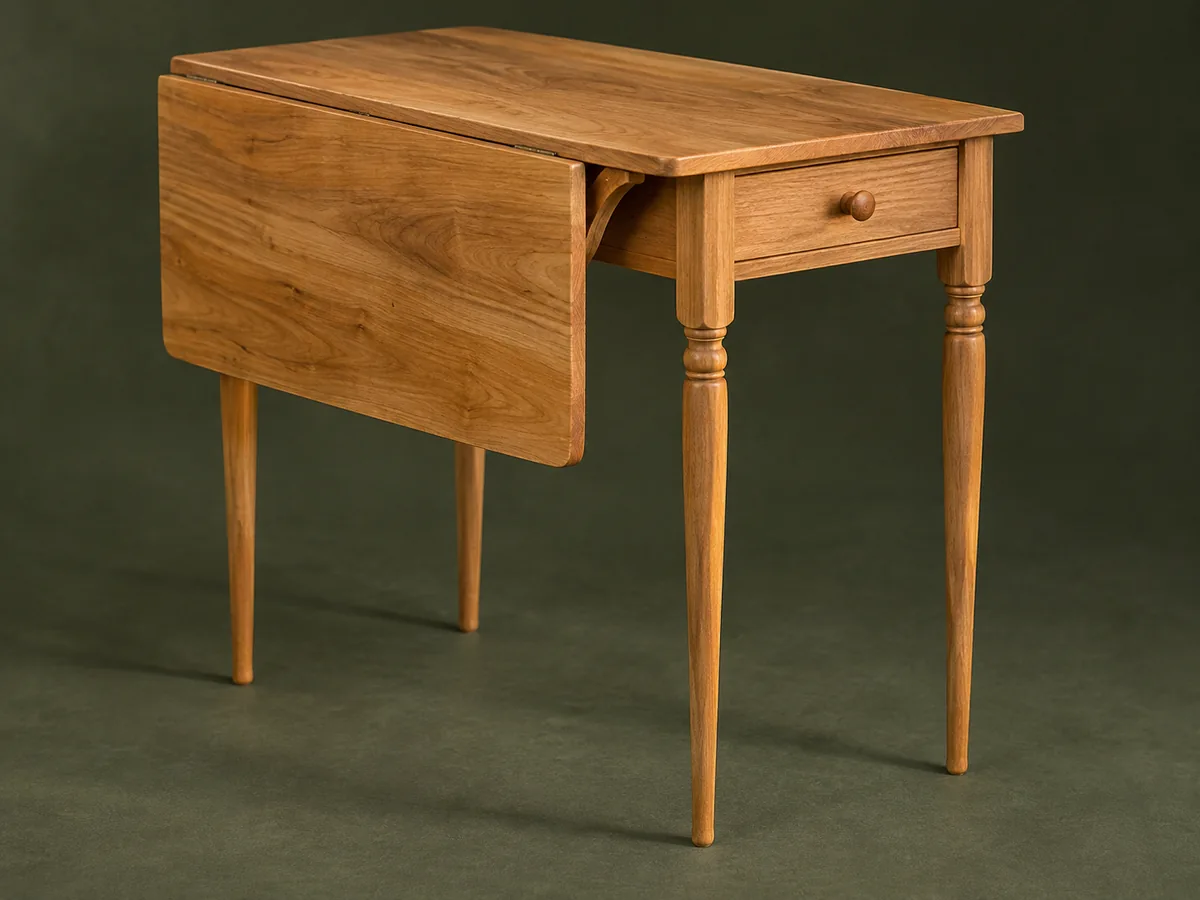
A small Shaker table with one hinged drop leaf, a wooden leaf support and a narrow end drawer.
Advanced6 stages6-page source
Design review required. Planning overview, not a shop-tested or construction-ready plan. Planning until the leg dimension and schematic are reconciled. A raised drop leaf is not a seat; the source supplies no rated load.
Understand the project
What makes this build.
Turned legs, a rule joint and a fitted drawer require advanced joinery.
A wooden leaf support replaces the original handmade brass support.
The source contains an unresolved leg-length inconsistency.
Points to resolve before building
- Planning until the leg dimension and schematic are reconciled.
- A raised drop leaf is not a seat; the source supplies no rated load.
Prepare the workbench
Materials & tools.
Check what you have, then confirm stock sizes and hardware against your chosen dimensions.
Materials checklist
Tools & operations
- Lathe
- Saw
- Router with matched rule-joint bits
- Drill
- Chisels
- Clamps
Tool choices may include practical editorial suggestions. Use workholding and guarding appropriate to the actual machine and operation.
Choose dry, sound stock and test unfamiliar joints in scrap. Keep guards, push aids, eye protection, and dust control appropriate to the work.
Keep the numbers close
Measurements to know.
Selected dimensions verified from the source. This is not an automatically scaled cutting list.
| Fixed top | ⅝ × 14¾ × 30 inches | Source p. 4 |
|---|---|---|
| Drop leaf | ⅝ × 12⅜ × 30 inches | Source p. 4 |
Printed diagrams and concept images are not scale references. Verify measurements, material thickness, hardware fit, and allowances before cutting.
Inches to millimeters
Convert a measurement without changing the design. Enter a decimal or a fraction, such as 1 3/8.
Nominal lumber names and actual finished sizes are different. Converting units does not choose a substitute stock size.
Read, assess & plan
Explore the construction.
Review stages explain the historical design and unresolved decisions; they are not approval to build or use it.
Resolve the leg discrepancy
- Compare the schematic and original text before preparing leg blanks: the list says 20⅛ inches while instructions say a 26⅛-inch finished leg. Establish the correct height rather than choosing silently.
Before moving onOne verified leg length is recorded.
Shape and join the base
- Turn the tapered legs and fit apron and stretcher tenons to their mortises. Keep the drawer end distinct from the closed apron end.
Before moving onThe dry base is square and has the correct drawer opening.
Fit the leaf support
- Cut the apron notch for the wooden support and test its travel. Verify that it fully supports the raised leaf and retracts without binding.
Before moving onSupport engages positively in working position.
Prepare top and rule joint
- Glue and flatten the fixed top and leaf, then make sample rule-joint cuts with the actual bits and hinges. Fit the hinge recesses only after confirming the joint rolls freely.
Before moving onLeaf closes without tearing the edge or opening an excessive gap.
Build the end drawer
- Fit the thin drawer components and runners to the actual base. Preserve movement in the solid drawer bottom as described, rather than gluing its entire perimeter.
Before moving onDrawer slides without binding and bottom can move.
Attach and finish
- Use the slotted cleats to attach the fixed top while allowing seasonal movement. Finish the components and check stability with the leaf raised.
Before moving onLeaf, drawer and base work together without interference.
1 / 6
Progress and notes stay in this browser. Nothing is uploaded.
Source notes.
- Original PDF
- Shaker Single Drop leaf Table.pdf
- Source length
- 6 pages
- Attribution
- The Woodworker’s Journal, September/October 1986, project 17805EZ.
- This edition
- 116 Studio · Original written companion and AI concept image · November 2026
Page references count from the first page of this PDF. The original is retained in the owner’s private woodworking collection; it is not distributed by this website. Consult it for full drawings, templates, and details beyond this companion.
Historical plans can omit essential context. Source references identify where a detail came from; they do not certify the design or replace current manufacturer instructions or applicable professional review.
More from this corner of the shop.
Tables & desks
Hand-Tool Side Table
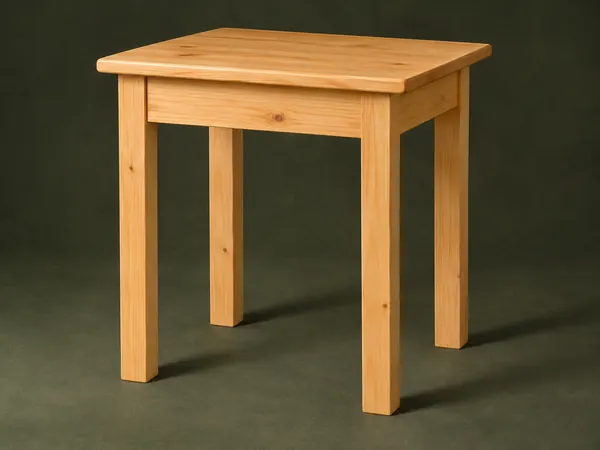
A small pine table uses square legs, mortise-and-tenon aprons and a solid board top.
Intermediate5 stages
Tables & desks
Open-Shelf Bedside Table
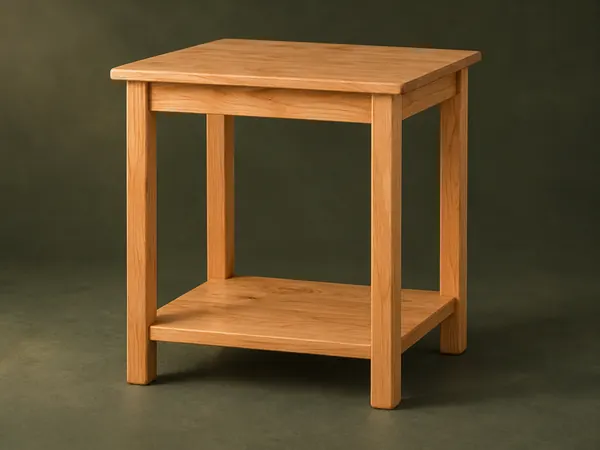
A small table has rounded square legs, a solid top and a low shelf captured in leg notches.
Intermediate5 stages
Tables & desks
Four-Sided Book Table
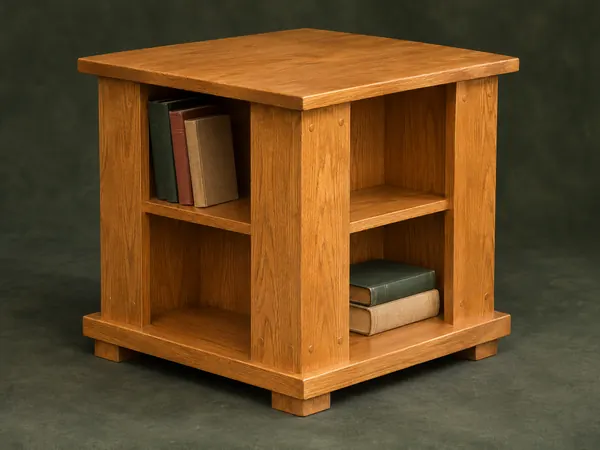
A square end table offers small book compartments on four sides beneath a projecting top.
Intermediate5 stages