The sawing is modest, but a toy for very young children requires a separate safety review.
Project library / Boxes & small projects
Boxes & small projects / Design study
Inset Teddy Bear Puzzle
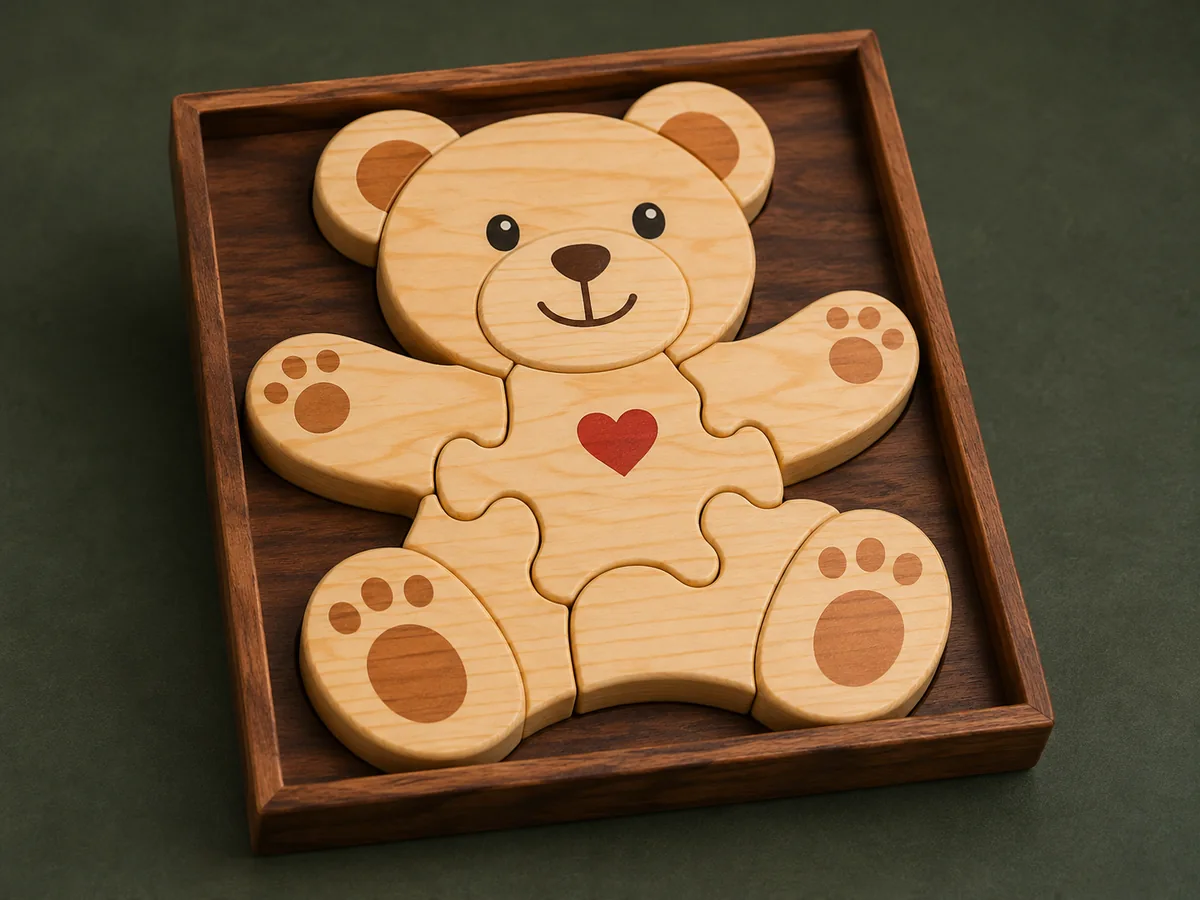
A pale wooden teddy-bear puzzle nested in a dark walnut-edged rectangular tray.
Intermediate5 stages6-page source
Design review required. Planning overview, not a shop-tested or construction-ready plan. Planning only: the 1985 age recommendation and “non-toxic” wording do not demonstrate current toy compliance. Do not give small or breakable puzzle pieces to a child based solely on the old plan.
Understand the project
What makes this build.
The sawing is modest, but a toy for very young children requires a separate safety review.
Light pine pieces contrast with a dark walnut tray.
The bear silhouette includes rounded ears, paws and a painted heart.
Points to resolve before building
- Planning only: the 1985 age recommendation and “non-toxic” wording do not demonstrate current toy compliance.
- Do not give small or breakable puzzle pieces to a child based solely on the old plan.
Prepare the workbench
Materials & tools.
Check what you have, then confirm stock sizes and hardware against your chosen dimensions.
Materials checklist
Tools & operations
- Scroll saw or bandsaw with suitable small-part support
- Drill
- Clamps
- Sander
Tool choices may include practical editorial suggestions. Use workholding and guarding appropriate to the actual machine and operation.
Choose dry, sound stock and test unfamiliar joints in scrap. Keep guards, push aids, eye protection, and dust control appropriate to the work.
Keep the numbers close
Measurements to know.
Selected dimensions verified from the source. This is not an automatically scaled cutting list.
| Tray top | 8 × 10 inches | Source p. 4 |
|---|---|---|
| Bear thickness | ½ inch | Source p. 1 |
Printed diagrams and concept images are not scale references. Verify measurements, material thickness, hardware fit, and allowances before cutting.
Inches to millimeters
Convert a measurement without changing the design. Enter a decimal or a fraction, such as 1 3/8.
Nominal lumber names and actual finished sizes are different. Converting units does not choose a substitute stock size.
Read, assess & plan
Explore the construction.
Review stages explain the historical design and unresolved decisions; they are not approval to build or use it.
Review the intended age
- Treat the source’s one-to-three-year age claim as unverified. Have piece sizes, breakage, coatings and small-parts hazards reviewed under current toy requirements before making this for a child.
Before moving onA documented age-appropriate design review is complete.
Lay out the tray opening
- Transfer the bear silhouette to the two halves of the tray top as shown in the private pattern. Align the halves carefully so their seam closes around the opening.
Before moving onThe opening is centered and both halves meet flush.
Cut the bear shape
- Trace the finished tray opening onto the pine blank, then transfer the interlocking divisions. Cut with suitable support and leave enough material for careful final fitting.
Before moving onPieces remain sound with no fragile short-grain projections.
Build the tray
- Glue the bottom below the opening and add the thin walnut edging. Keep the cavity free of squeeze-out and trim the edging flush.
Before moving onThe tray lies flat and all puzzle pieces seat smoothly.
Inspect and decorate
- Smooth every edge and apply only reviewed decoration or finish. Recheck each part for splinters, detachable fragments and age-appropriate dimensions before use.
Before moving onThe completed item passes the intended-use review.
1 / 5
Progress and notes stay in this browser. Nothing is uploaded.
Source notes.
- Original PDF
- Teddy Bear Puzzle.pdf
- Source length
- 6 pages
- Attribution
- The Woodworker’s Journal, November/December 1985, project 19090EZ.
- This edition
- 116 Studio · Original written companion and AI concept image · November 2026
Page references count from the first page of this PDF. The original is retained in the owner’s private woodworking collection; it is not distributed by this website. Consult it for full drawings, templates, and details beyond this companion.
Historical plans can omit essential context. Source references identify where a detail came from; they do not certify the design or replace current manufacturer instructions or applicable professional review.
More from this corner of the shop.
Boxes & small projects
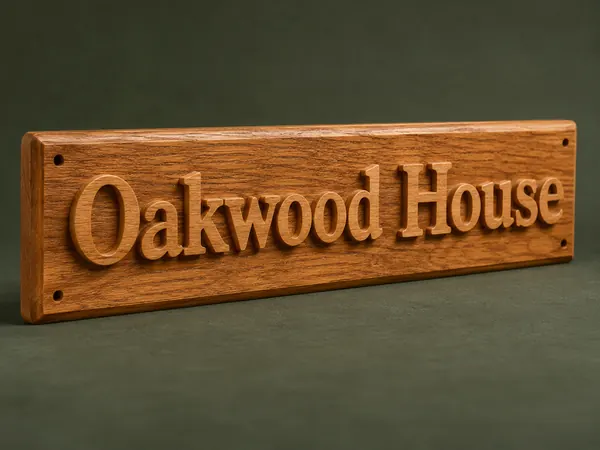
Raised-Letter Address Plaque
A wood house sign combines individually fretted letters with a beveled backing board.
Intermediate5 stages
Boxes & small projects
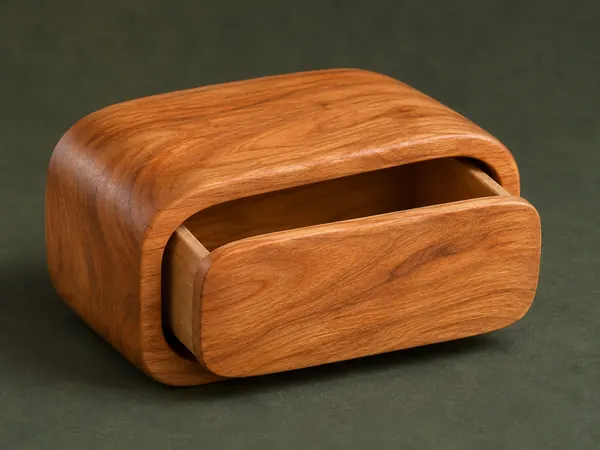
One-Drawer Bandsaw Box
A single wooden block becomes a rounded little case and a matching pull-out drawer.
Intermediate5 stages
Boxes & small projects
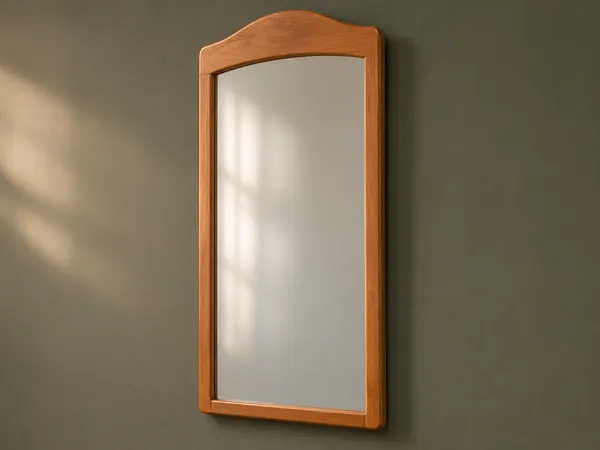
Arched Bathroom Mirror
A narrow timber mirror frame has a gently peaked curved top and doweled corner joints.
Intermediate5 stages